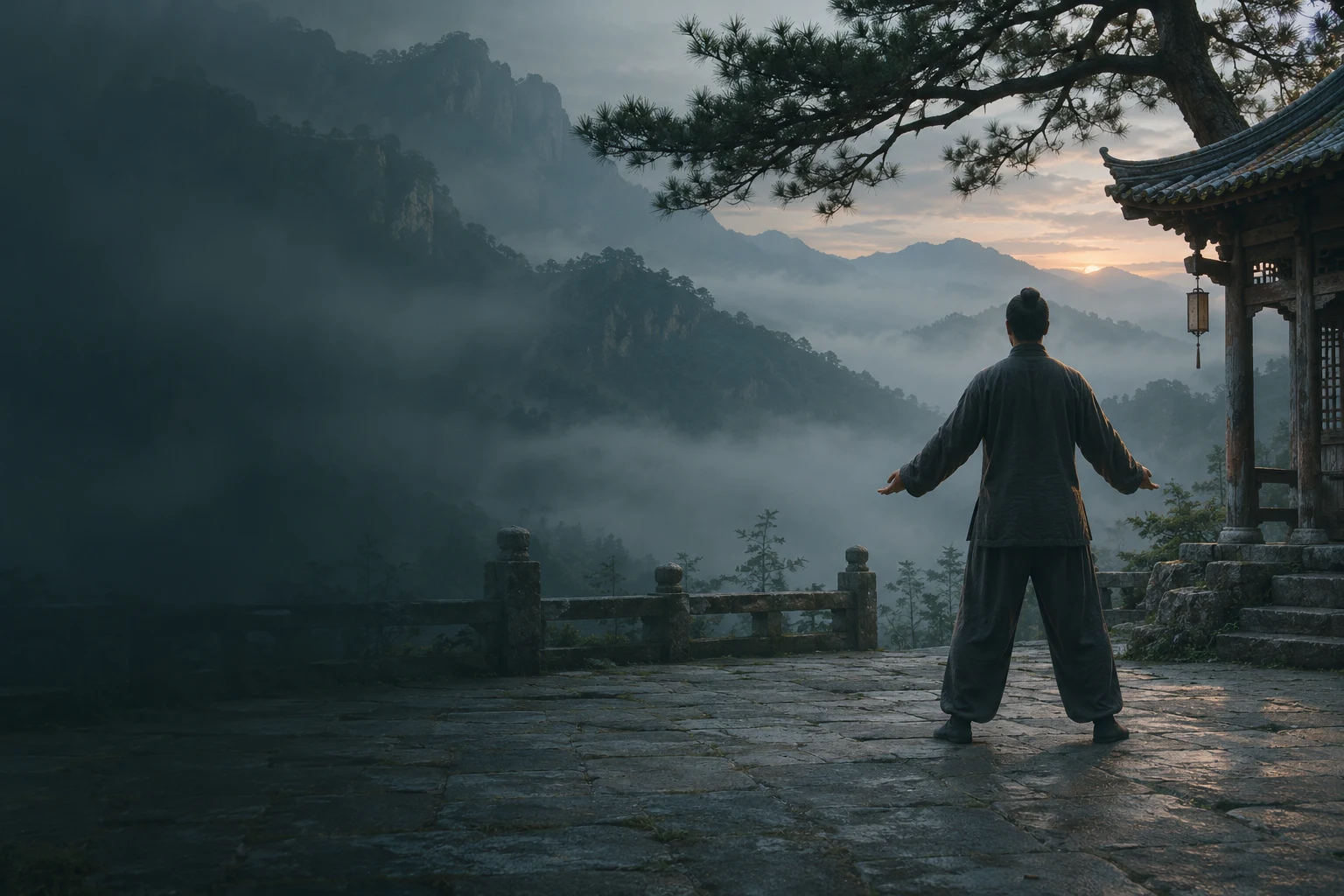
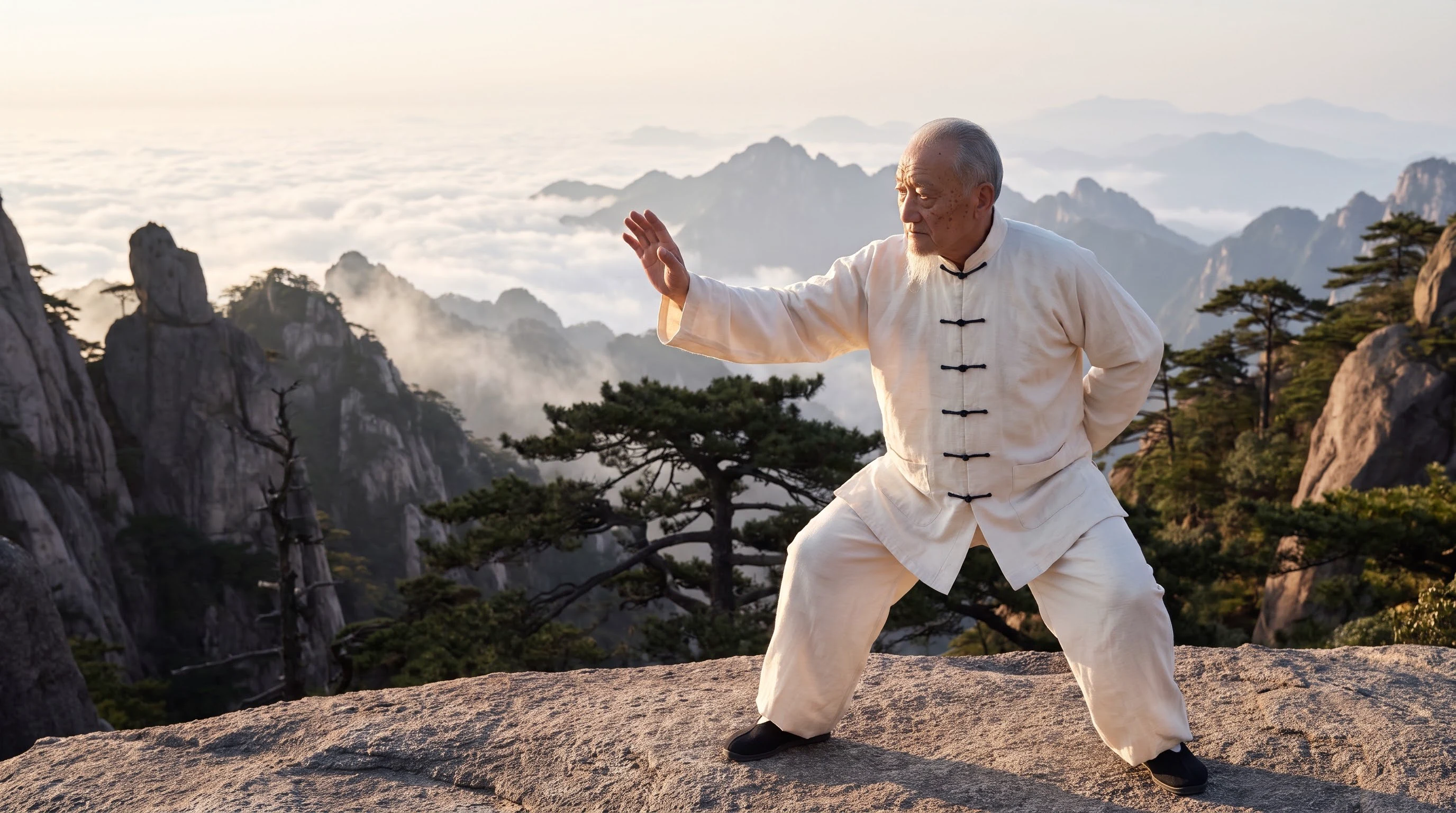
Explore Chinese qigong with DrMa, guided by the tradition of nourishing life. Bring movement, breath and attention into a daily ritual, with the aspiration to age with vitality and live fully.
What would you like to keep doing as you grow older? Walk somewhere new. Spend time with family. Enjoy the freedom of retirement with curiosity and purpose.
The Chinese idea of yangsheng — nourishing life — invites care for the body into everyday living. It offers a way to think about the years ahead through the attention you give yourself today.
A daily ritual. A lifelong intention.
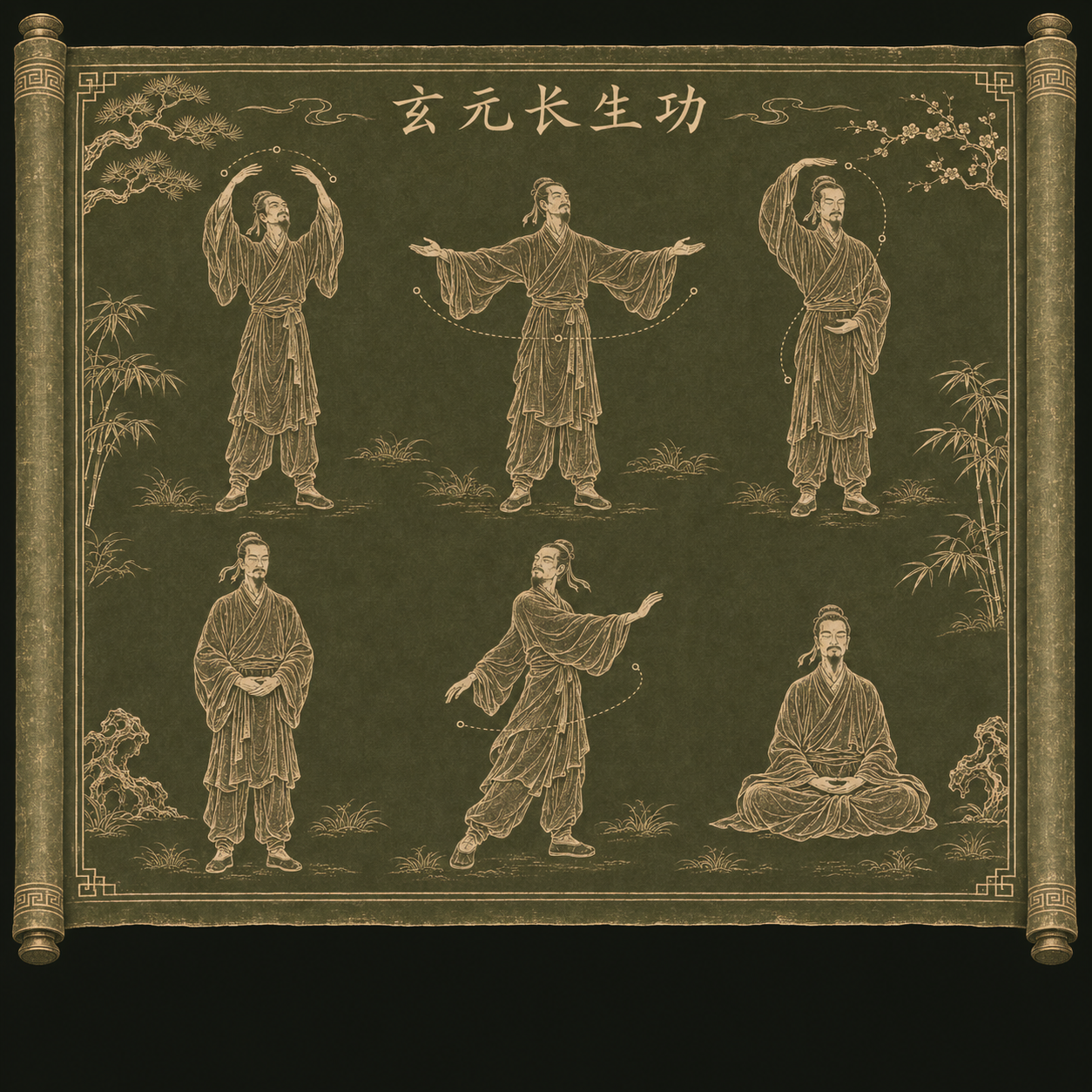
玄元长生功, or Inner Strength, brings that intention to qigong practice. Here, longevity is an aspiration to live well across the years; the practice begins with posture, breath and attentive movement.
玄元长生功
YE TIANSHI · THE HERITAGE BEHIND OUR NAME
A LIFE'S WORK. A LIVING INSPIRATION.
叶天士
YE TIANSHIA great name in Chinese medicine · Qing dynasty
In the Jiangnan region of Qing-dynasty China, the physician Ye Tianshi built a legacy through his work with patients. His clinical observations were gathered by his students into texts that carried his thinking beyond his own lifetime.
What survives a teacher is more than a name. It is a body of knowledge that later generations can study, question and bring into their own lives. That idea of continuity inspires the Ye Tianshi brand.
Alongside China's medical traditions runs the art of yangsheng — nourishing life. Movement, breathing and daily cultivation express an enduring aspiration: to care for the body, cultivate vitality and grow older well.
Today, DrMa adapts traditional Baduanjin practice for this course, 玄元长生功 · Inner Strength. Under the Ye Tianshi name, that cultural inspiration meets a practical invitation: begin with your body, return to your breath, and make cultivation part of everyday life.
Ye Tianshi's clinical cases were compiled by his students in Linzheng Zhinan Yi'an. His medical legacy is the brand's cultural inspiration; 玄元长生功 is the contemporary course name for DrMa's adaptation of Baduanjin.
A physician's legacy, preserved through generations of study.
02 · THE PHILOSOPHY
养生 Nourishing life
Care for the body. Cultivate vitality. Think in years.
03 · THE PRACTICE
今日 With DrMa
Traditional movement, adapted for a daily practice today.
THE INNER STRENGTH APPROACH
MOVE. BREATHE. PAY ATTENTION.
A simple invitation. Layers to explore.
01 / BODY
Find your ground.
Look closely at posture, balance and the way your body moves as a whole.
02 / BREATH
Notice your rhythm.
Explore the place of breathing within traditional practice, following the teacher’s guidance.
03 / ATTENTION
Stay with the movement.
Bring attention to effort, transitions and the details that repetition can reveal.
A PRACTICE THAT DEEPENS
ENTER GRADUALLY. DISCOVER MORE.
Begin with the visible movement. Explore the coordination beneath it. Return with greater attention. Let learning unfold through practice.
立身 · FoundationAlign the body. Find your ground.
FOUNDATION
Learn to see the movement.
Start with the shape of the practice. Explore placement, direction and comfortable movement before pursuing complexity.
Observe how each movement begins and ends.
Notice your balance and unnecessary effort.
Use repetition to become familiar with the sequence.
A question to carry: Where am I working harder than I need to?
贯通 · ConnectionBring breath, attention and movement together.
CONNECTION
Explore what connects the form.
As the sequence becomes familiar, bring attention to transitions and the relationship between posture, breath and movement.
Explore how one movement leads into another.
Observe whether your breathing feels unforced.
Notice changes in ease, steadiness and coordination.
A question to carry: How do my movements work together?
涵养 · CultivationSettle the mind. Deepen the practice.
CULTIVATION
Return to the form. Notice more.
Explore the traditional idea of qi flow alongside the physical details of practice. Build familiarity through attentive, repeated learning.
Consider traditional concepts in their cultural context.
Reflect on what feels different from one practice to another.
Value consistency over chasing unusual sensations.
A question to carry: What can I notice today that I missed before?
Begin with the form. Explore the connections. Return with attention.
THE LANGUAGE OF INNER PRACTICE
WHAT LIES BENEATH THE FORM?
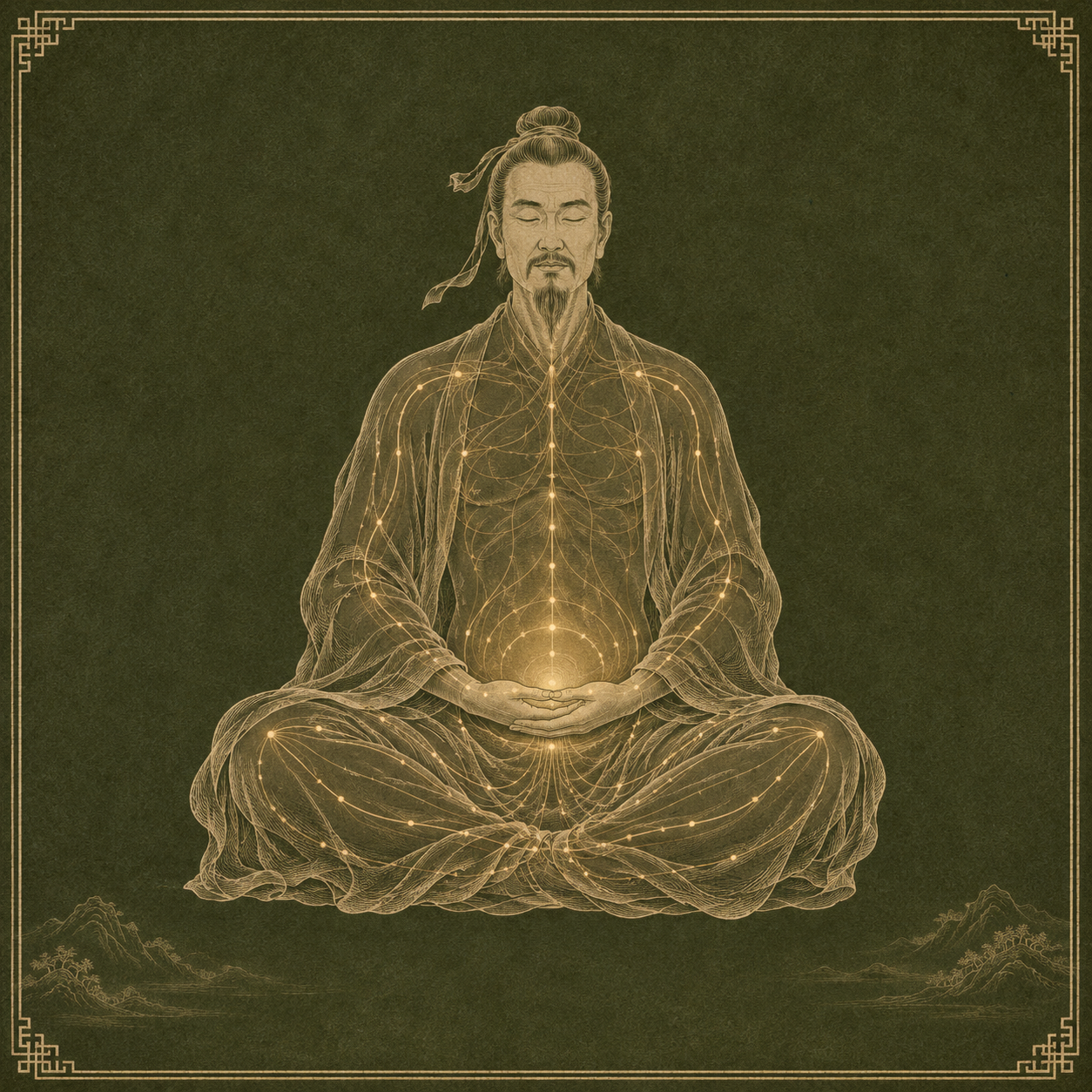
INNER CULTIVATION · 静坐涵养
In traditional Chinese teaching, qi and meridians offer a language for discussing the body and its patterns of connection.
Inner Strength makes room to explore that language while staying attentive to what you can actually observe: your posture, breathing, effort and movement.
Be curious about change. You do not have to force a feeling.
These are traditional concepts, not established anatomical pathways. No specific energy sensation or “opening” of meridians is guaranteed.
DrMa · Inner Strength玄元长生功
YOUR GUIDE INTO THE PRACTICE
DrMa.
Teacher of Inner Strength
师
A TRADITION TO EXPLORE. A TEACHER TO LEARN WITH.
Inner Strength is taught by DrMa and rooted in the Chinese qigong practice of Baduanjin.
Across 12 lessons, explore posture, breath and attentive movement with DrMa. Let the form become familiar, then return to the details: how you stand, how you move, and where you direct your attention.
Since learning Inner Strength with DrMa, I feel better in myself. The clearest change for me is that I sleep more soundly and have more energy during the day. Those are meaningful improvements in my everyday life. Thank you, DrMa, for your guidance.
— Anonymous student
STUDENT EXPERIENCE
I notice the difference when I walk.
Since learning Inner Strength, I feel a little better overall, and I walk faster than I used to. It is a change I can notice in daily life, and I am happy about it. I am grateful to DrMa for helping me learn the practice.
— Anonymous student
STUDENT EXPERIENCE
A calmer mind. More focus.
Since practising Inner Strength with DrMa, the biggest change I have noticed is feeling calmer. My mind feels clearer, and I find it easier to concentrate on what I am doing. These changes mean a lot to me. Thank you, DrMa, for your guidance.
— Anonymous student
Translated from Chinese student accounts. Individual experiences vary.
Inner Strength (玄元长生功, Xuanyuan Changsheng Gong) is the course brand for DrMa’s teaching of Chinese qigong, rooted in traditional Baduanjin, also known as the Eight Brocades. The course brings this traditional practice into a guided learning experience.
Is this Tai Chi or martial arts training?
This course is based on Baduanjin qigong. It explores movement, posture, breath and attention. It is not a Tai Chi form or a self-defence course.
What do you mean by qi and meridians?
Qi and meridians belong to traditional Chinese frameworks for understanding the body. Here, they are explored as cultural and practice concepts, not as proven anatomical pathways. Opening meridians or feeling a particular energy sensation is not a promised outcome.
How do the stages work?
The course has 12 lessons. Foundation explores posture and movement; Connection brings attention to breath and coordination; Cultivation develops familiarity through repeated practice. These are layers of learning, with room to return to earlier movements as your understanding grows.
How does the pre-order work?
The 12-lesson course costs US$49 at launch, including applicable taxes. The first successful pre-order starts the seven-day offer. After that, the price is US$199. We email your course access seven days after your payment. The purchase section shows your estimated access date if you order today.
What does Changsheng mean here?
Changsheng evokes the traditional aspiration for a long life. In this course, it expresses a philosophy of nourishing life and aging well, not a promise to extend lifespan, reverse aging or prevent illness.
Is this for people in retirement?
Retirement can be a meaningful time to explore a regular movement practice. Suitability depends on the individual; age alone does not determine readiness.
Is this medical treatment?
No. This is a movement and cultural-learning course, not diagnosis or treatment. Benefits vary, and the course does not promise to cure a condition.
 YE TIANSHIExplore the pre-order