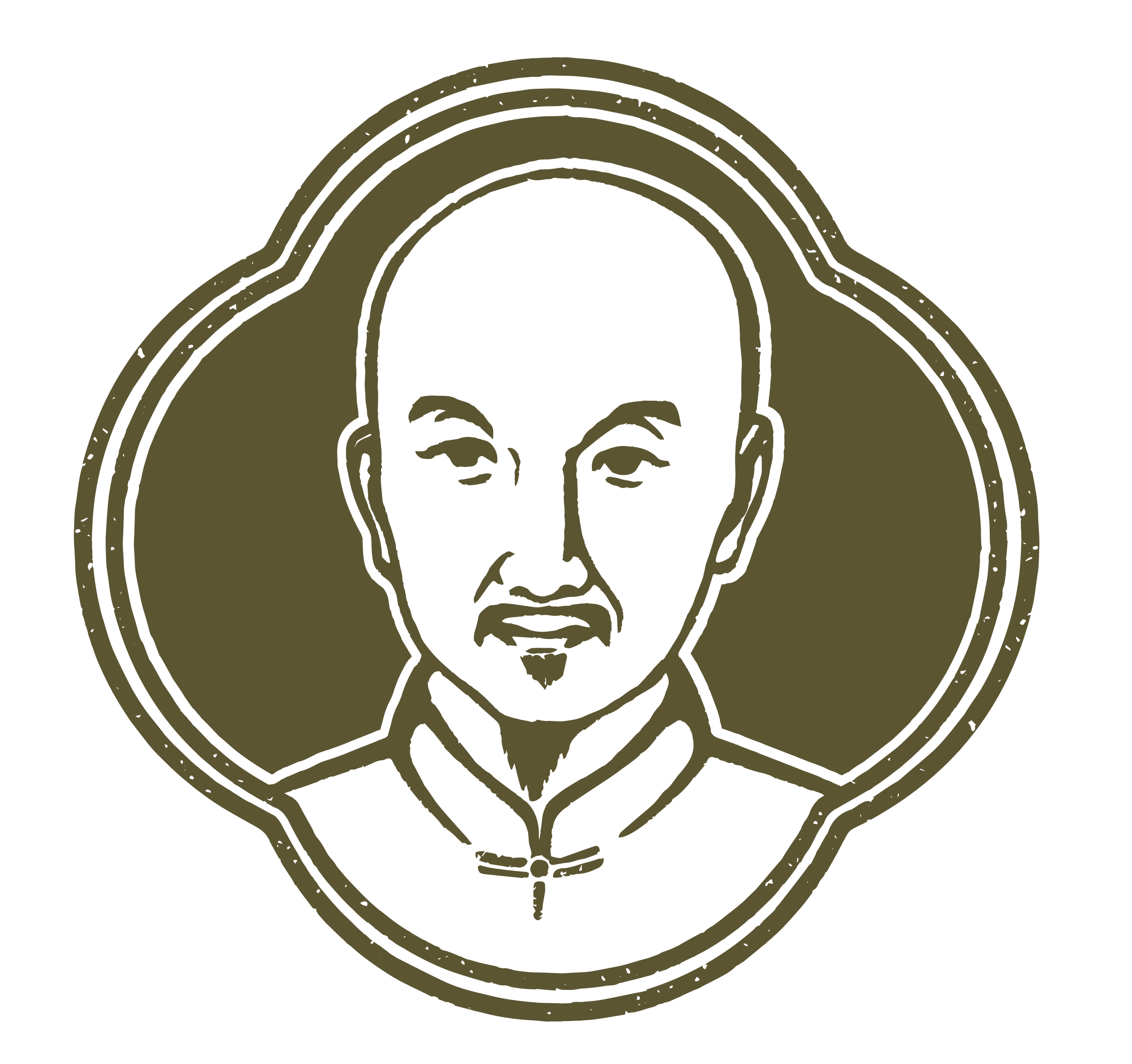
Who was he, and why does he have several names?
Ye is the family name; Gui is the personal name. Tianshi is his courtesy name — an additional name used in adult social life in historical China. He lived during the Qing, China’s last imperial dynasty. Xiangyan is another name used in accounts of him. Ye Tianshi, Ye Tian Shi and Ye Tian-Shi are spelling and spacing variants, while Ye Gui uses his personal name. These names should lead to one biographical record, not to different people.
He is associated with Wuxian in the area of present-day Suzhou, eastern China. That location matters when reading a phrase such as “our Wu region” in Wen Re Lun. The text speaks from a particular setting; its regional observations should not silently become universal descriptions of every place or illness.
Dates: preserve the disagreement
Institutional reference works give different birth and death years. The table records what each source states, rather than deciding which date is correct. All place him in the Qing period.
Resolving the discrepancy requires earlier biographies, genealogical or inscriptional evidence, and a study of how the later accounts cite their sources. This guide has not completed that investigation. It therefore avoids building a precise age-by-age timeline from one unqualified pair of dates; an assumed difference between age-counting systems is not enough to explain the evidence.
| Reference | Dates stated |
|---|---|
| National Museum of Chinese Medicine | 1666–1745 |
| Encyclopedia of China | 1667–1746 |
| Ministry of Education historical dictionary, Taiwan | 1667–1747 |
Learning within a medical family
The museum profile names his grandfather Ye Shi and father Ye Chaocai as physicians and describes early learning with his father, followed by study with a pupil of his father surnamed Zhu. This gives “family learning” a concrete meaning: access to medical texts and practice through household and teacher relationships.
Later accounts often arrange these details into a seamless story of exceptional talent. A knowledge base should distinguish a documented biographical claim from a vivid later retelling. Stories about ingenious cures can be studied as cultural memory, but cannot independently establish what happened in a consultation or how effective a treatment was.
What his medical contribution looks like in the texts
Wen Re Lun discusses illnesses involving fever and heat using the categories of historical Chinese medicine. Its Four Levels — Wei, Qi, Ying and Xue — distinguish different patterns and changes in illness. It also repeatedly returns to fluids, dampness, and observations of the tongue and teeth. The interest lies in the distinctions it makes: similar appearances may be explained differently when their conditions change.
Lin Zheng Zhi Nan Yi An offers a different kind of evidence. Brief case records preserve selected observations and judgments; editorial discussions then draw out broader ideas. The Spleen and Stomach chapter, for example, brings together different eating difficulties and a discussion by Hua Xiuyun distinguishing the two traditional functional systems.
Reading the short discourse beside the case collection gives substance to labels such as “warm-disease physician” or “attention to Stomach yin.” Neither label exhausts the materials. The task is to examine where a concept is used, what supports it, and which cases complicate a simple summary.
From records to books: why the compiler matters
The attribution of Lin Zheng Zhi Nan Yi An distinguishes Ye Gui as the physician associated with the work and Hua Xiuyun as its compiler. The prefatory material describes collecting, arranging and publishing records. An individual case, a compiler’s discussion and a later annotation are different kinds of evidence, even when printed on the same page.
The public transcription of Wen Re Lun used here carries a separate attribution: discourse by Ye Gui, recorded by Gu Jingwen, and identified as the Hua Xiuyun version. That heading is evidence about this transmission of the text; it does not establish that every paragraph or electronic heading is Ye’s autograph composition.
Acknowledging these intermediaries keeps Ye Tianshi at the centre of the collection while explaining how readers can encounter his medicine today. It also prevents a compiler’s interpretation from being silently quoted as the physician’s own words.
A route through the knowledge base
Start with the opening of Wen Re Lun, then use the Four Levels guide to examine its distinctions and branches. Turn next to the case-record guide to see how a brief observation, an interpretation and an editorial summary differ. Readers already familiar with Chinese medicine can reverse that route, starting with a case and asking how a later theoretical account was built from it.
This is an evolving biographical guide, not a completed scholarly chronology. Its present contribution is to connect names, competing reference dates, surviving works and their editorial history, with sources that readers can inspect.
Sources and editorial scopeBiographical references are compared, not harmonised. Interpretations refer to the named classical texts. Links identify Chinese-language sources; this English guide is a site-produced adaptation.
Common questions
Is Ye Gui a different physician?
No. Gui is his personal name and Tianshi his courtesy name. Both occur in catalogues and biographical references.
Which dates should I cite?
Cite the dates in the specific reference you use and acknowledge the discrepancy where relevant. This guide has not resolved it through primary biographical evidence.
Historical and educational content, not medical advice. Consult a qualified healthcare professional for personal health concerns. About the collection